Rain Trail
Designer-Researcher
Alice Stevens
Year
2023
Funding Supported by HEIF through AUB + BCP Council
Rain Trail is an interactive, rain-responsive artwork comprising four large illustrations that appear only when wet, inviting participants to step into rain and discover their place within a living, interconnected landscape.
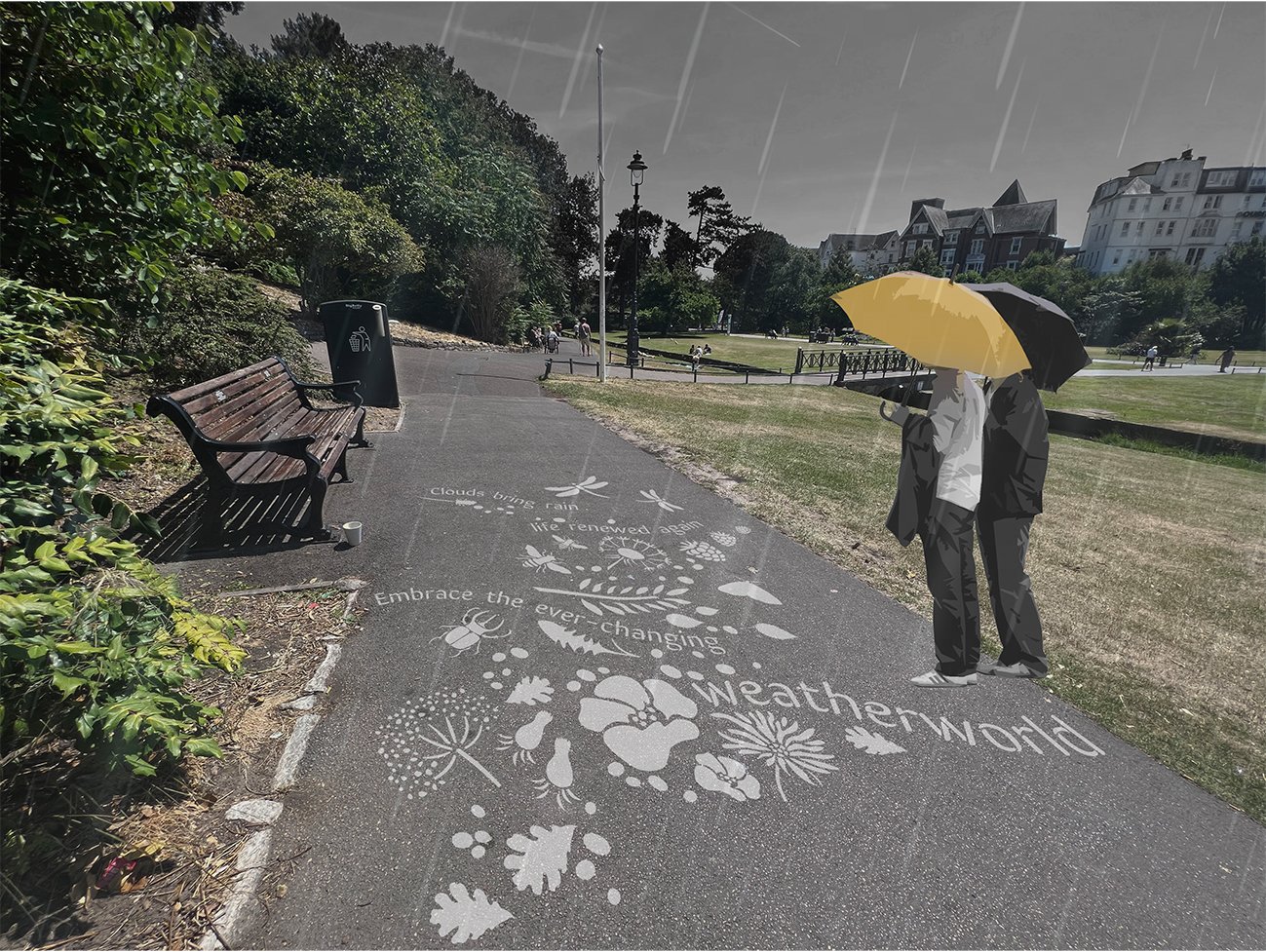
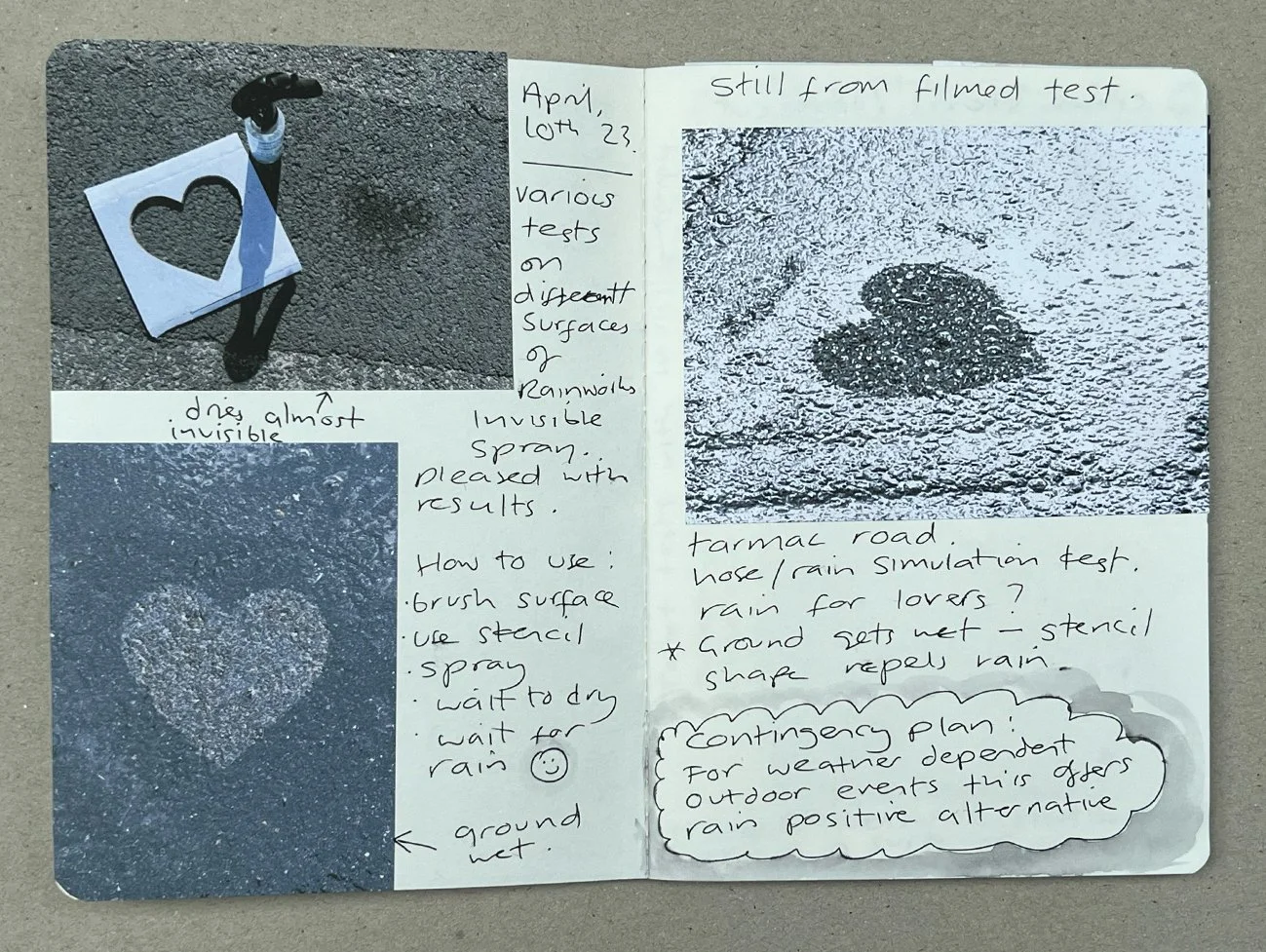
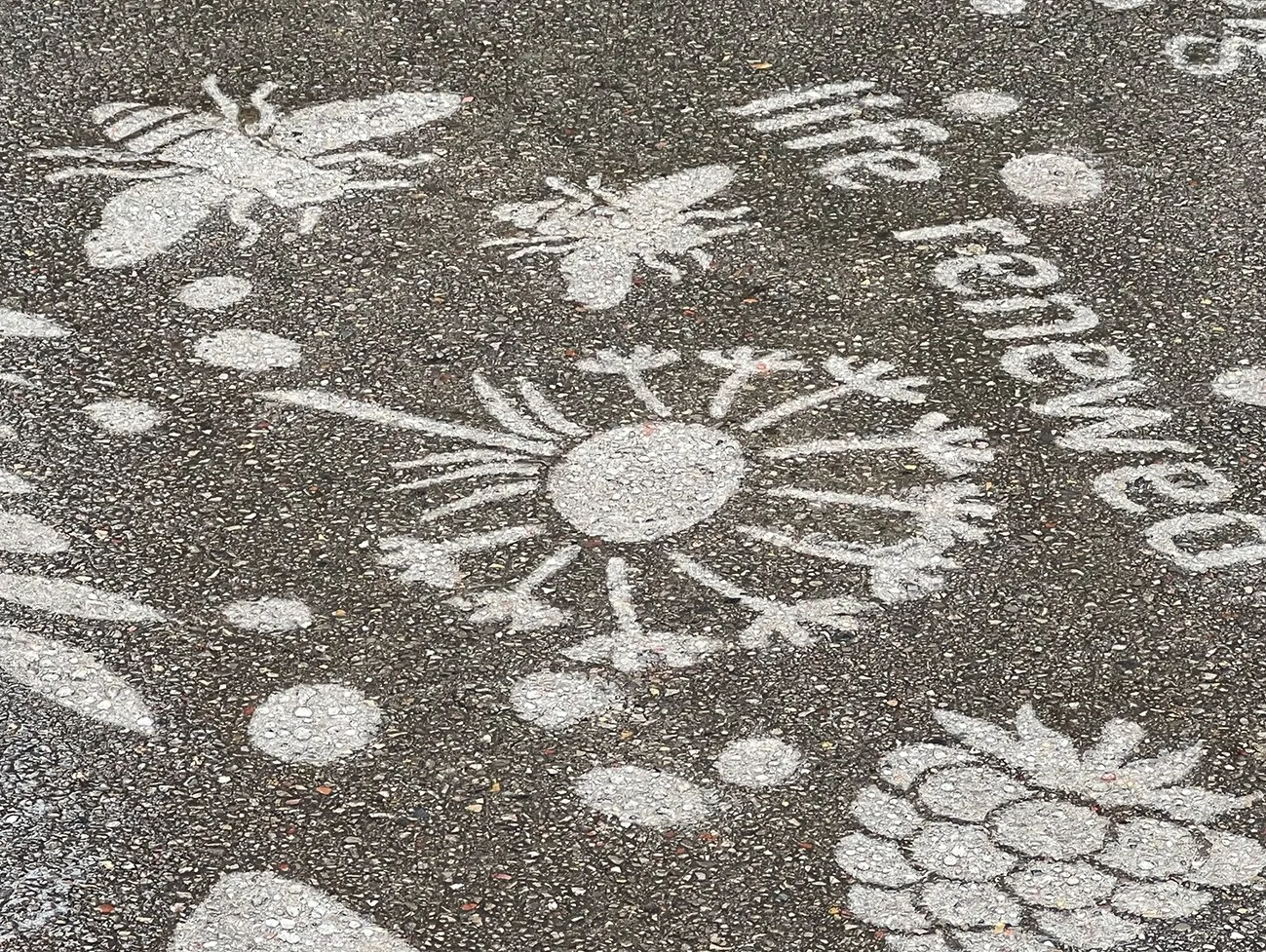
Paired with ecopoems and stencilled directly onto the path, the illustrations are created using invisible, eco-friendly hydrophobic paint that becomes visible when wet. This hidden quality means the artworks only emerge through rainfall or rain-simulation performances, transforming water into an active collaborator in the work. In doing so, Rain Trail creates moments of wonder that encourage participants to reimagine rain not as an inconvenience but as an opening to play, reflection, and connection.
Drawing on Abram’s (1996) insight that modern culture has become detached from direct sensory experience of the natural world, Rain Trail demonstrates how creative interventions can restore embodied ways of relating to place, weather, and the more-than-human world.
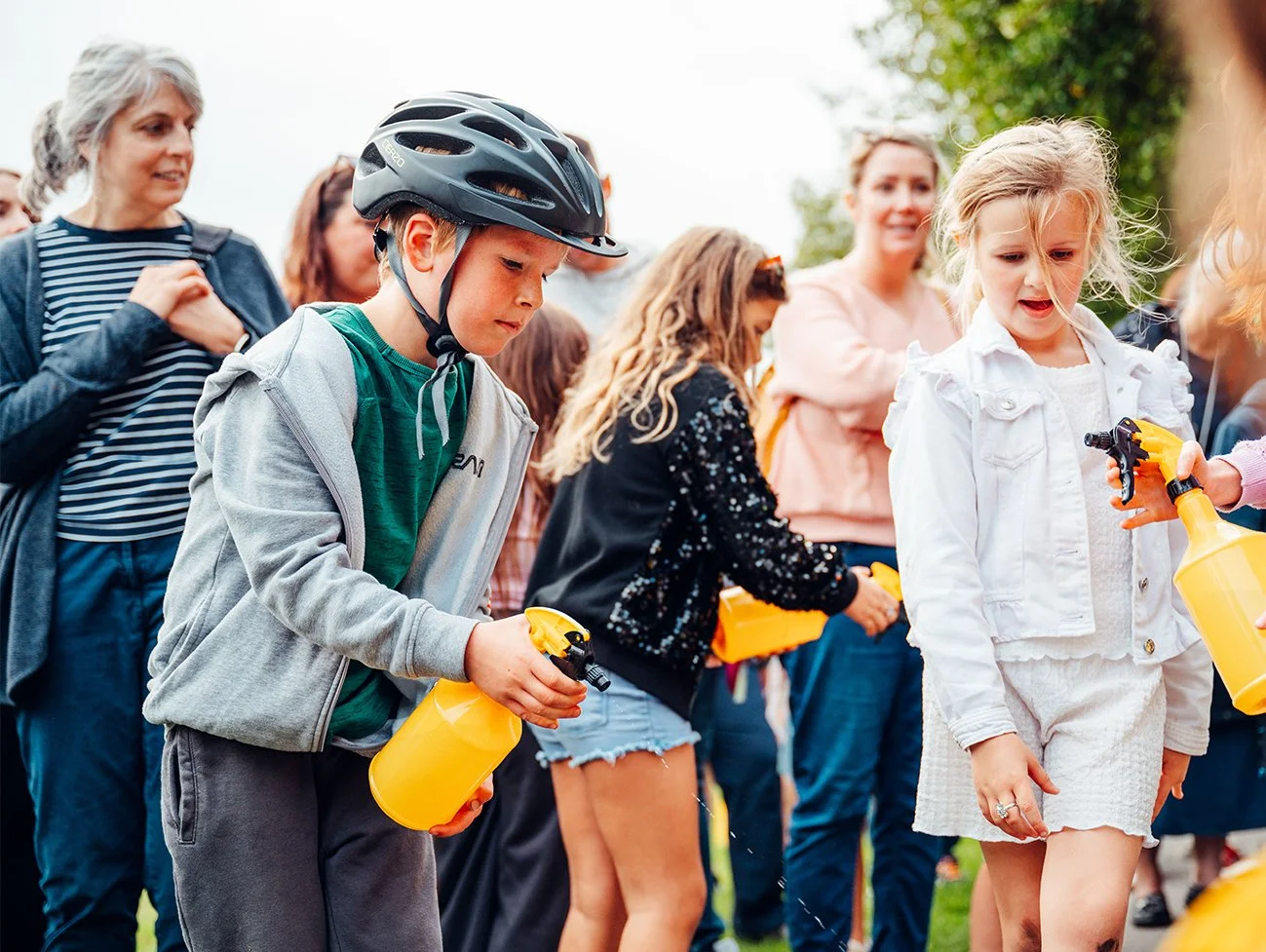
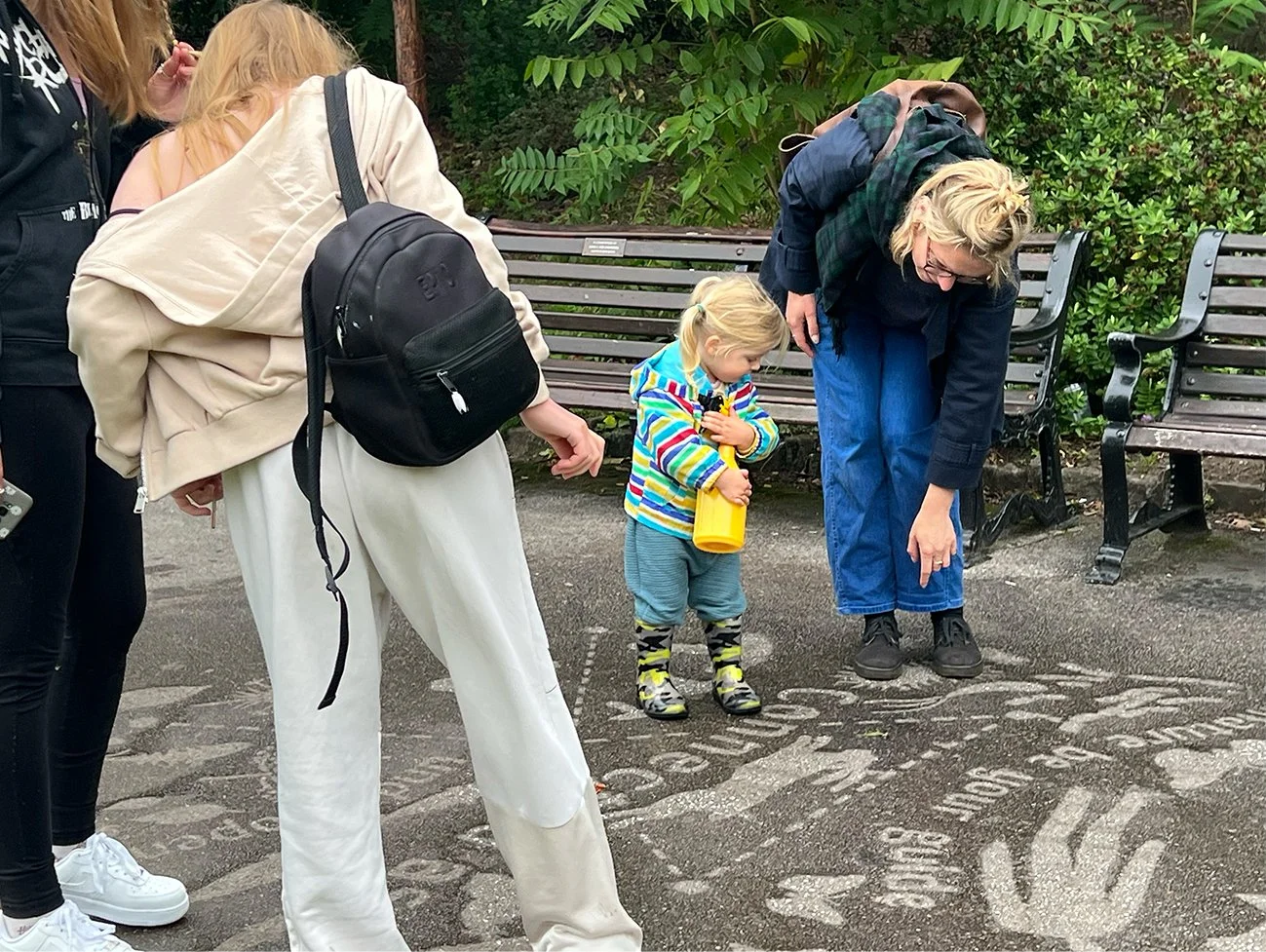
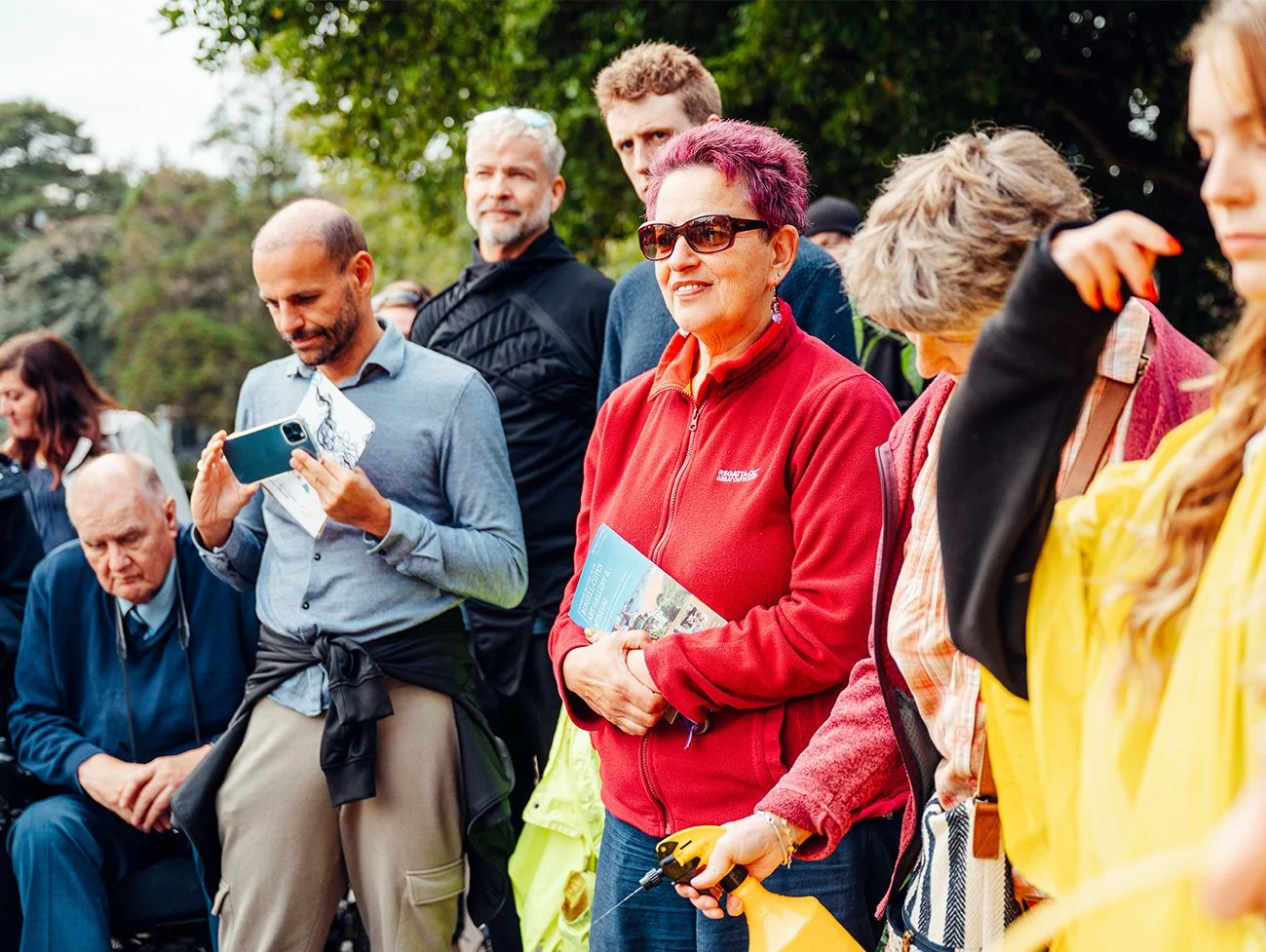
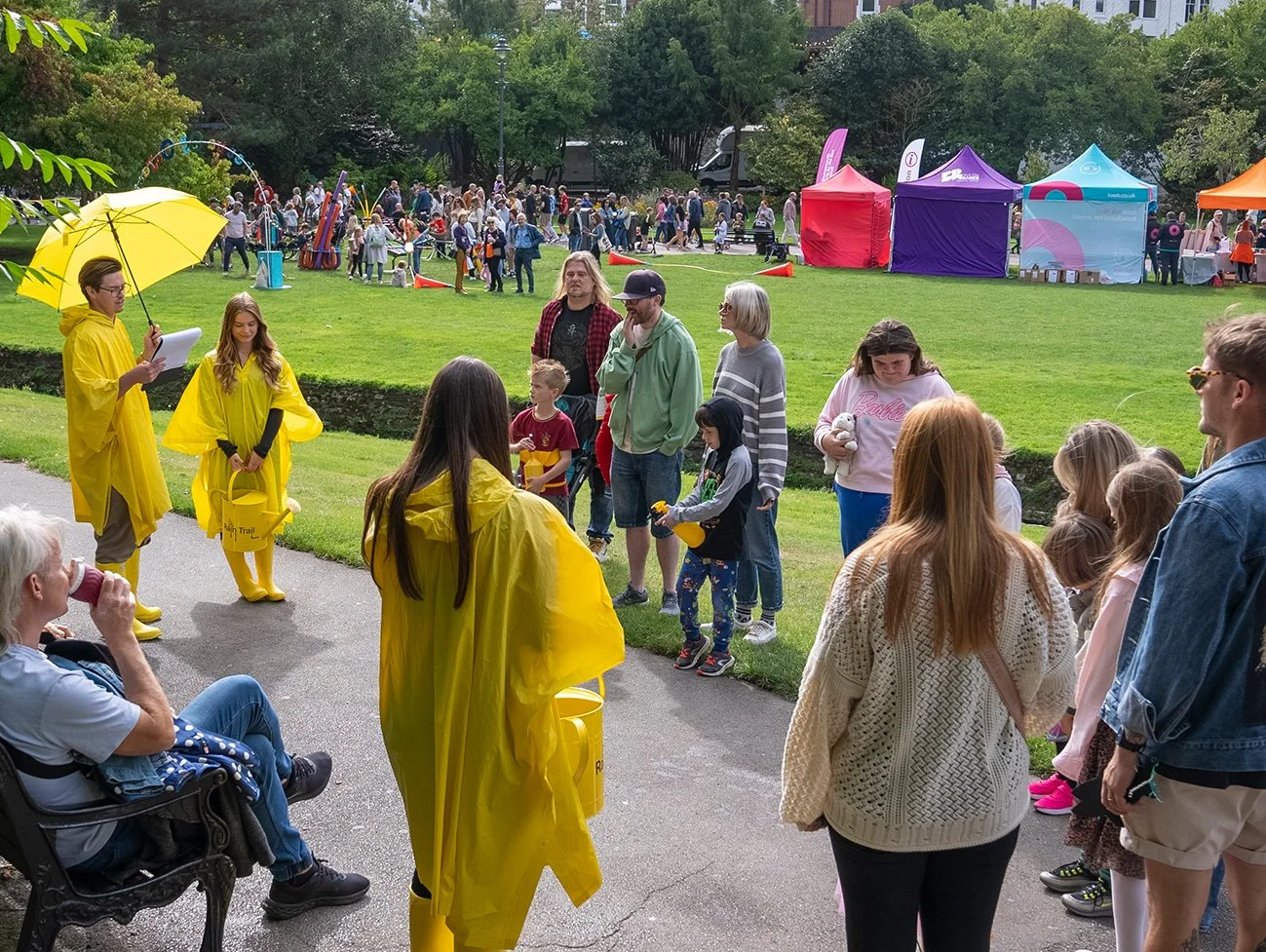
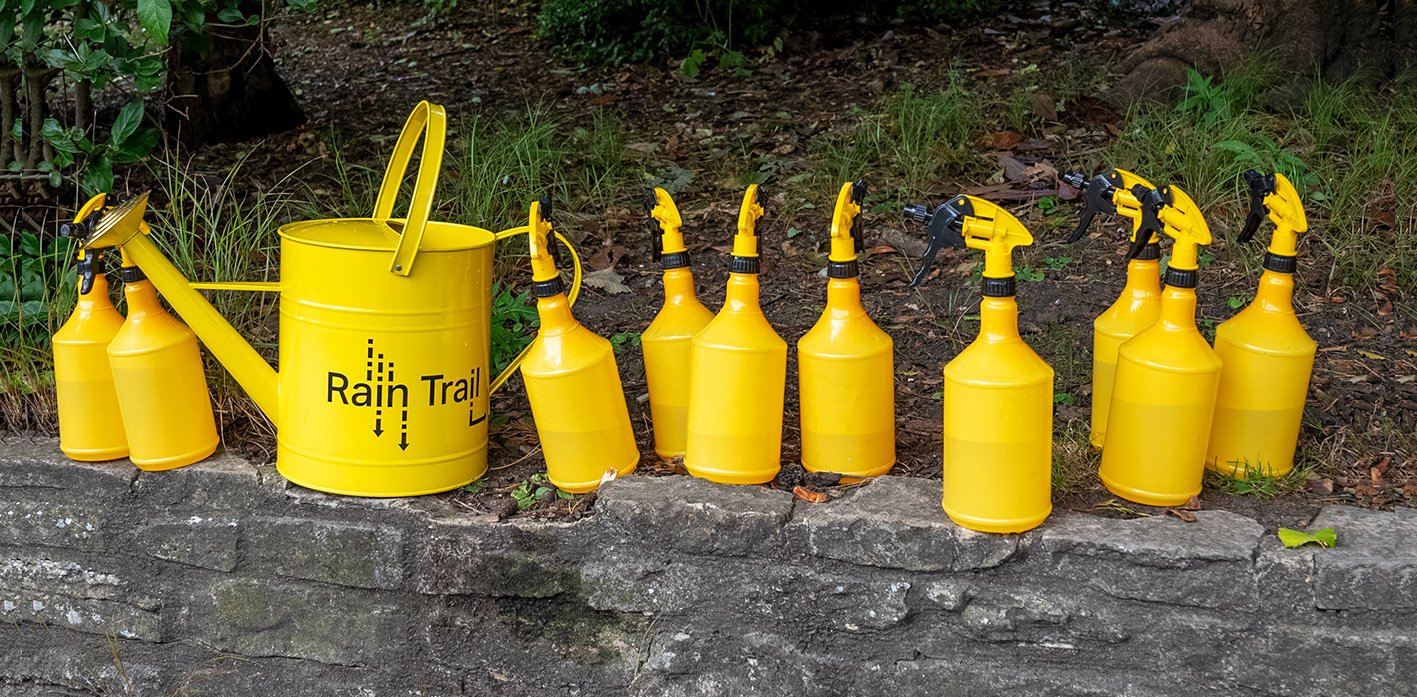
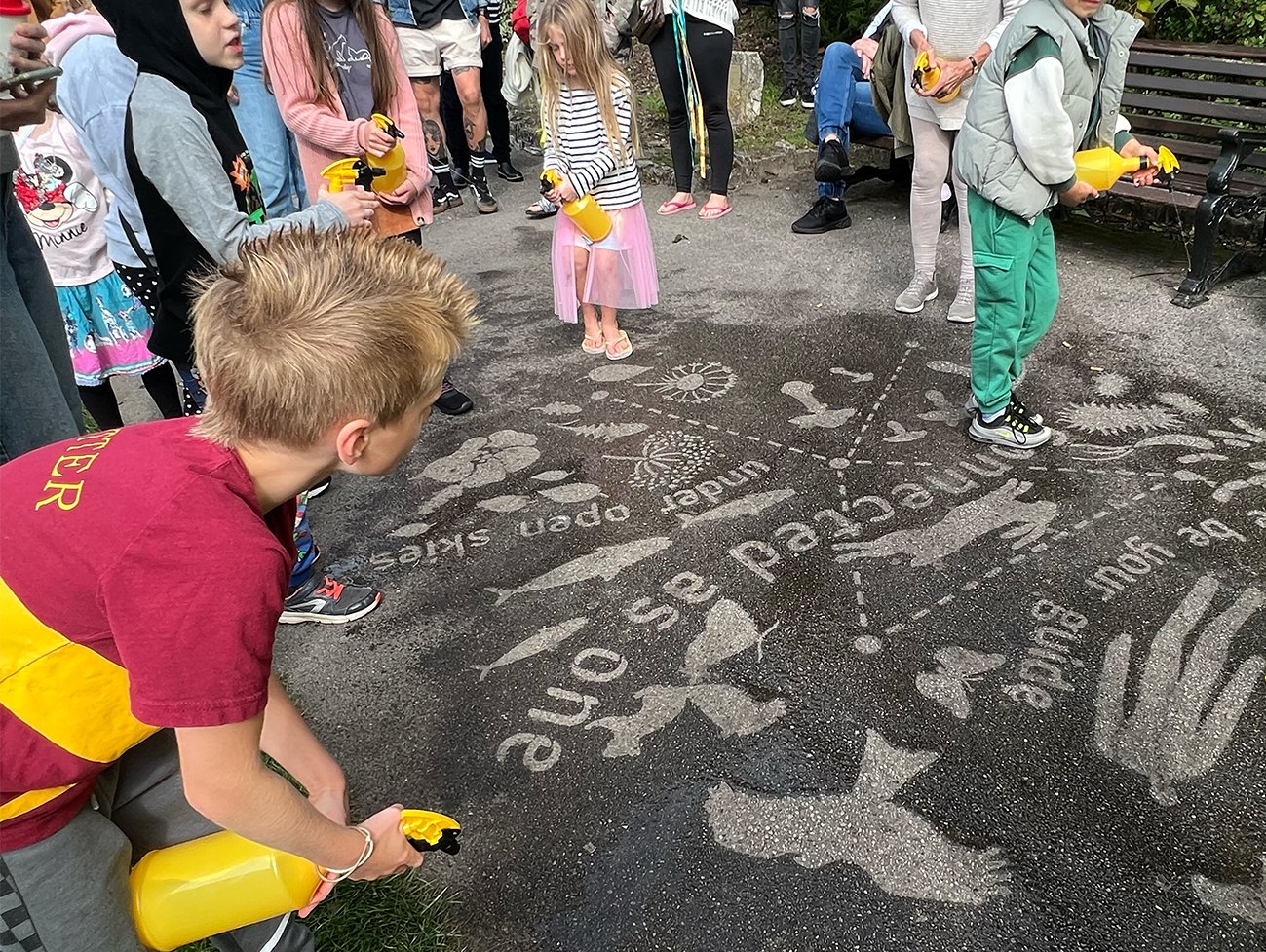
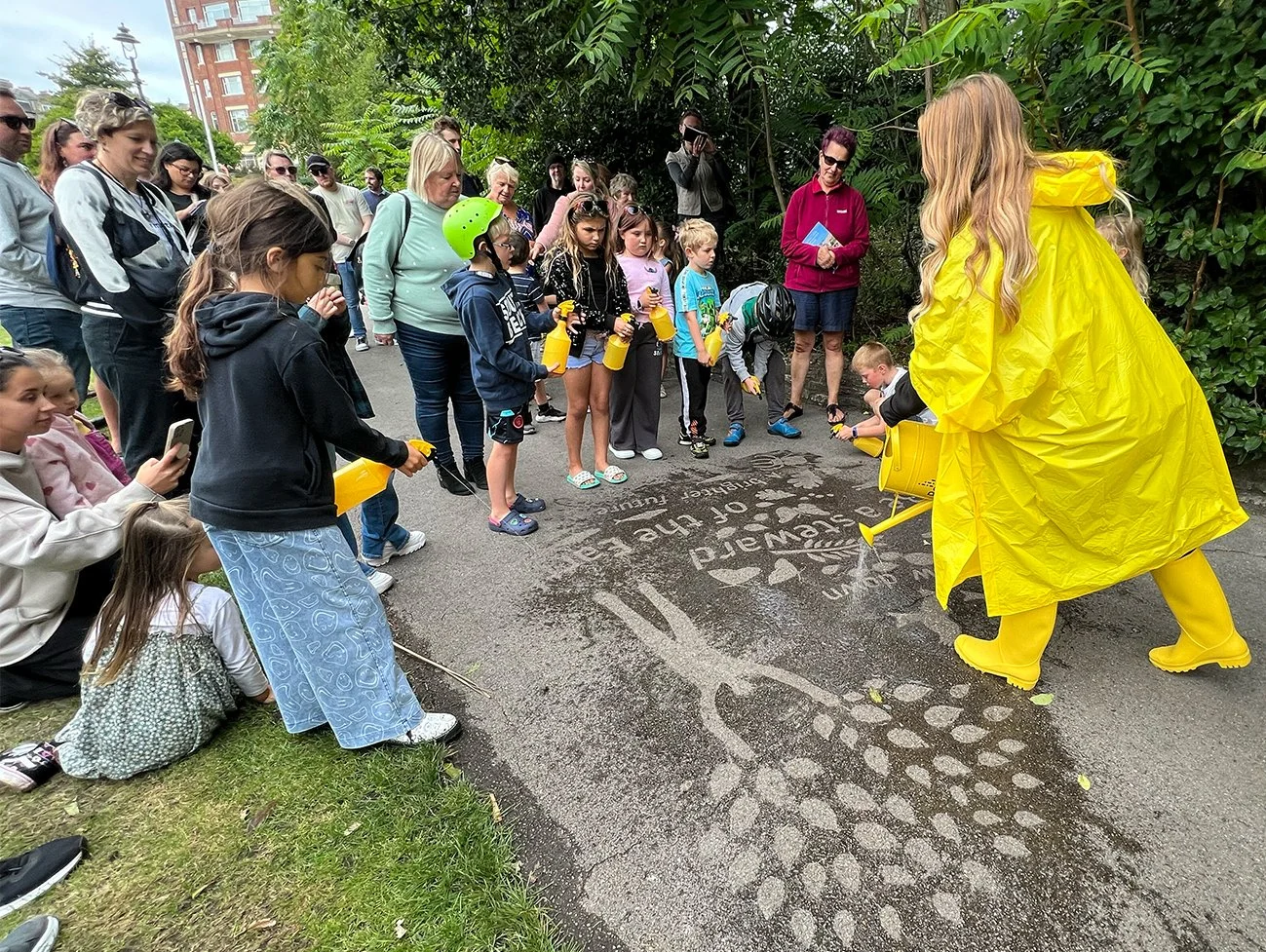
The photos below capture moments from the event, showing audiences actively revealing the artworks and engaging with the poetry.
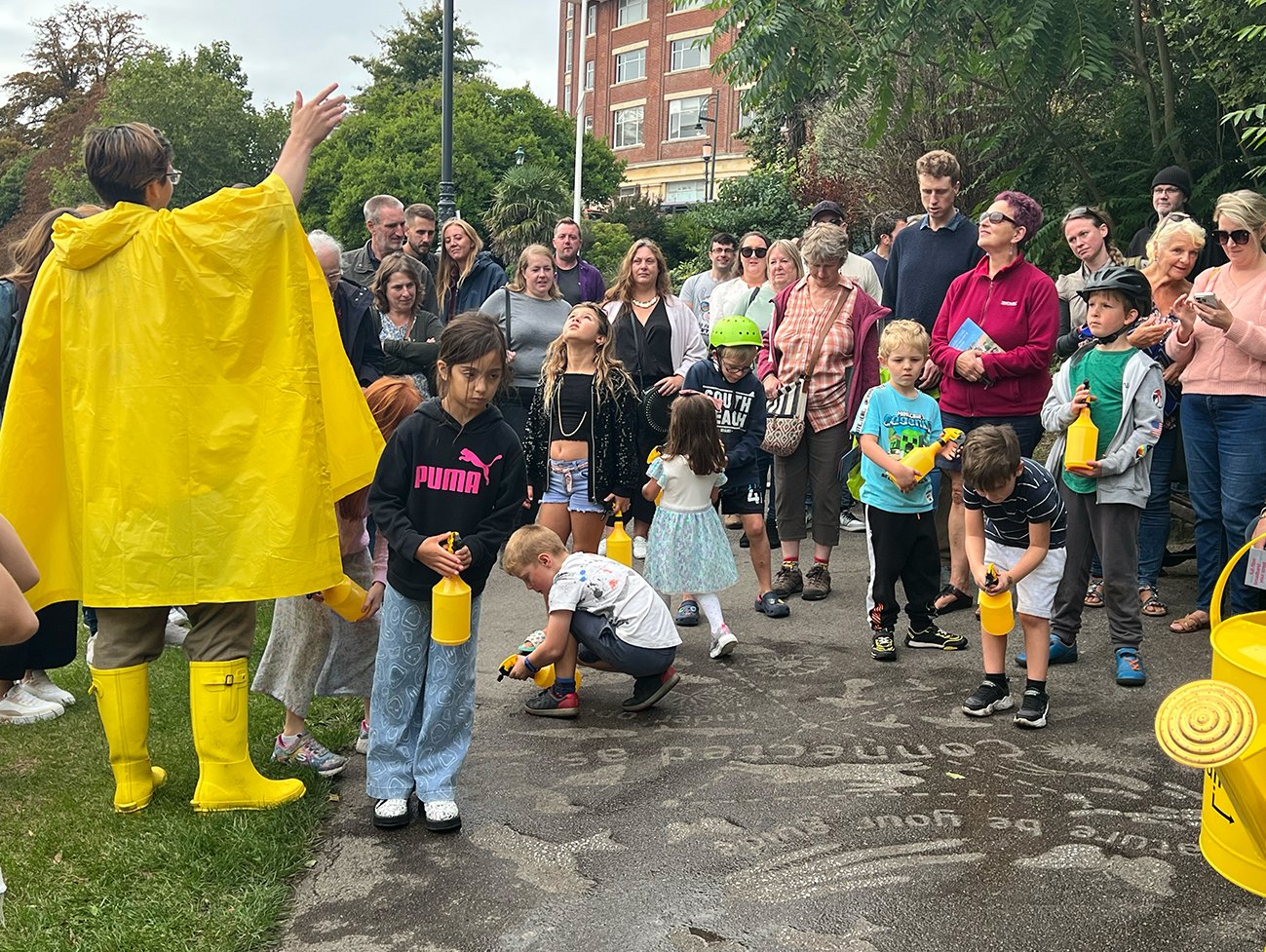
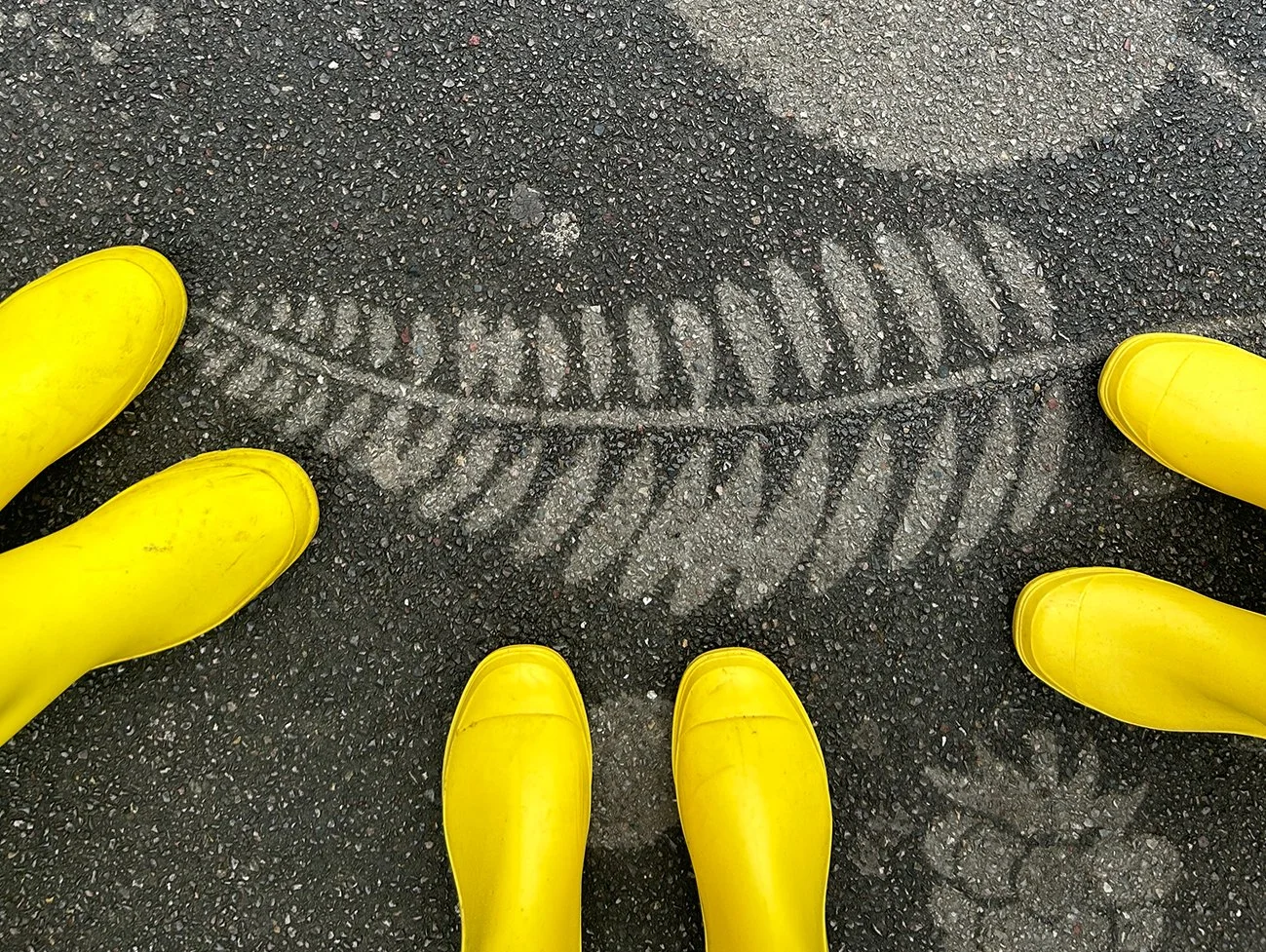
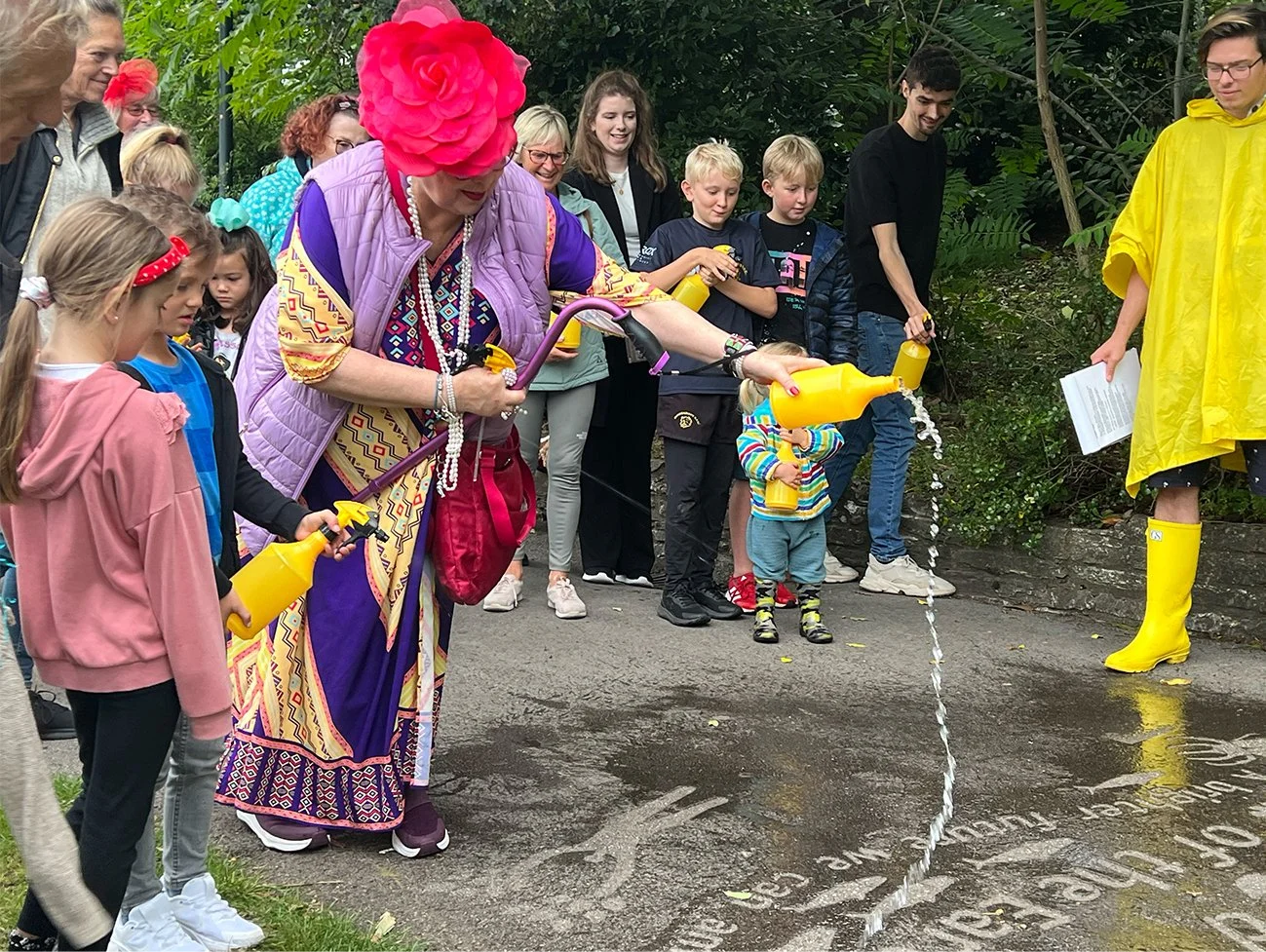

Rain Trail at Arts by the Sea Festival
Performing Rain and Public Participation
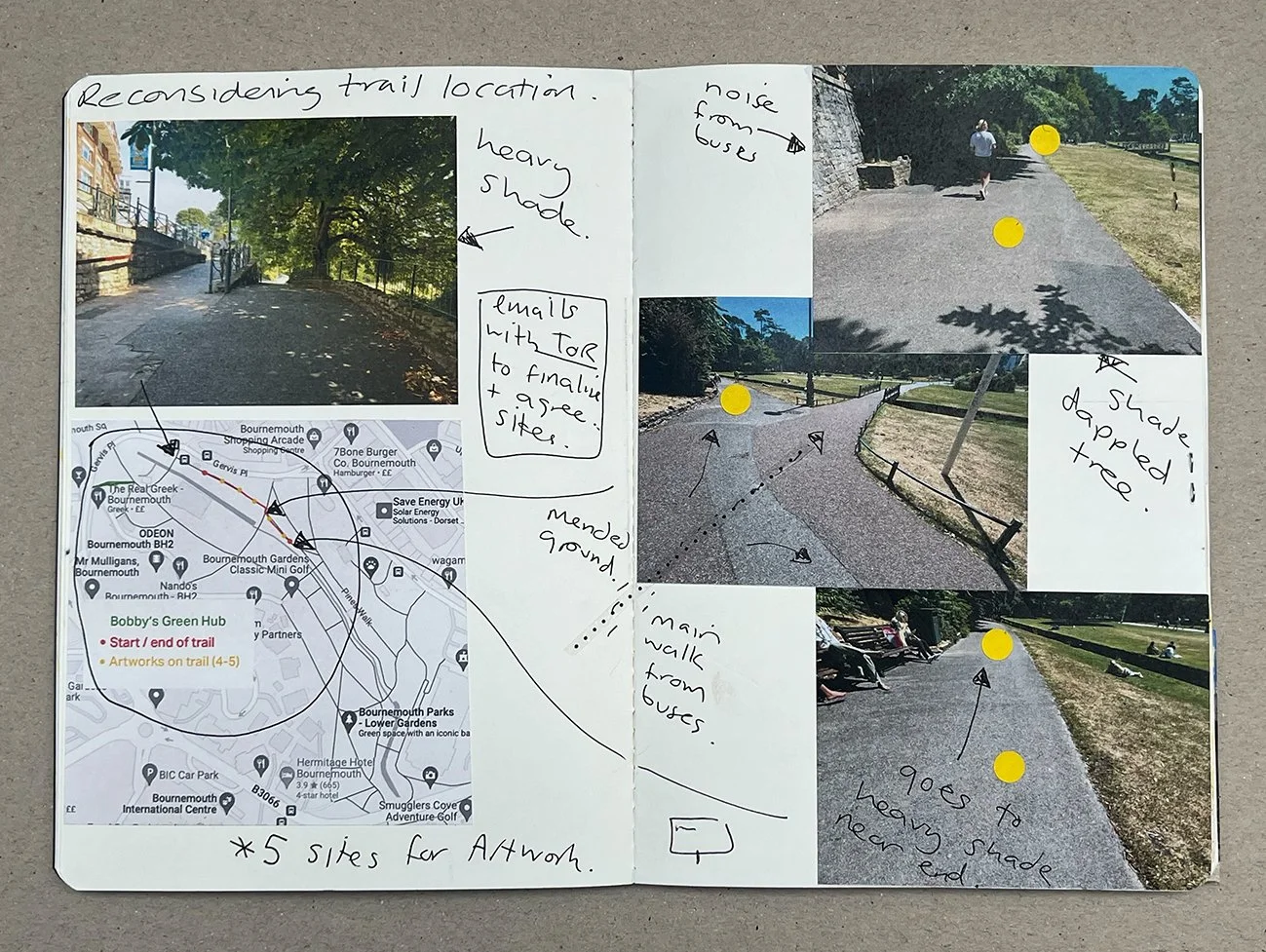
Rain Trail was showcased at Bournemouth Arts by the Sea Festival, a free annual event produced by BCP Council that attracts around 120,000 visitors. The 2023 festival theme, MOMENT, encouraged audiences to pause, be present, and discover new experiences together.
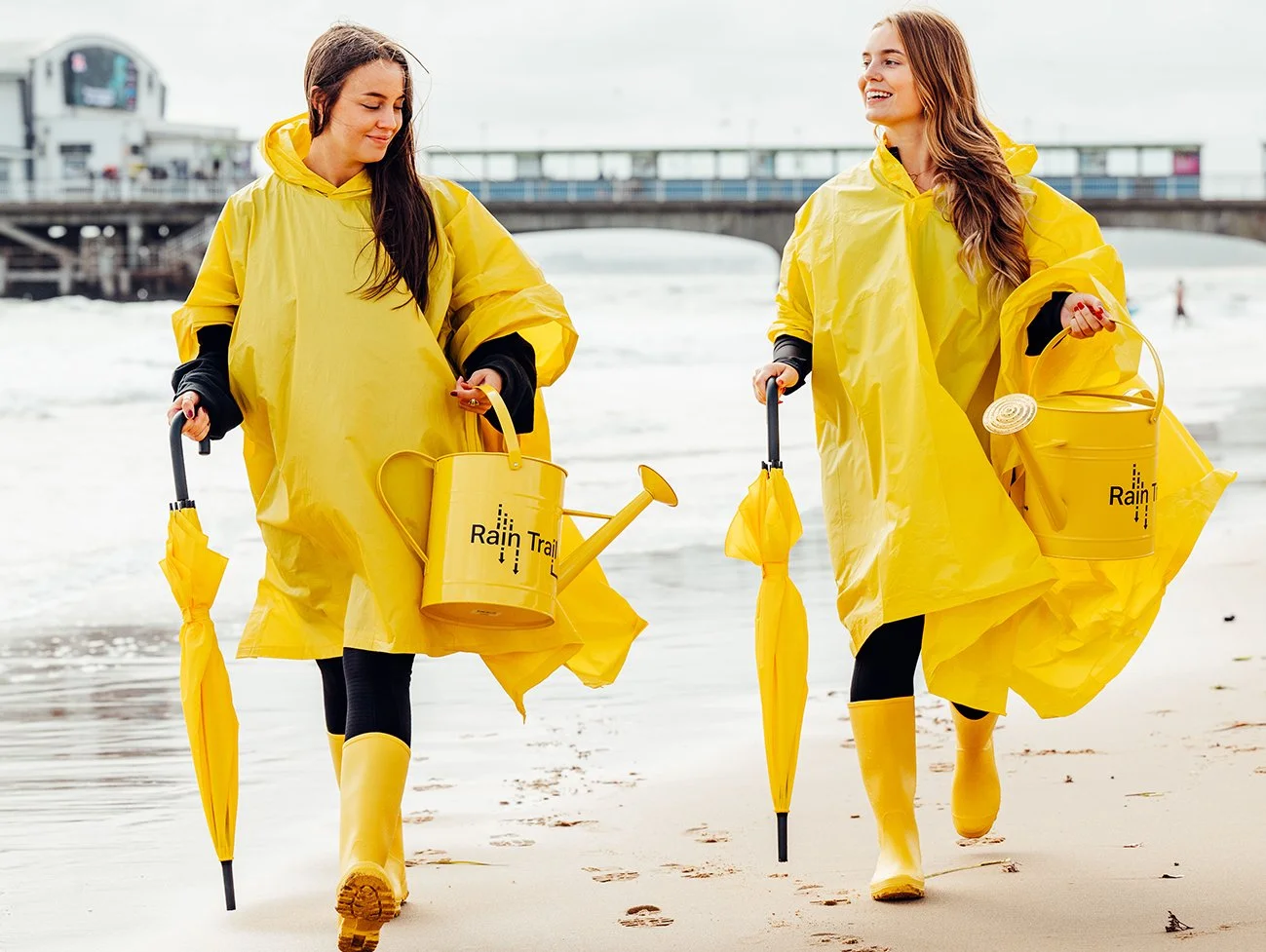
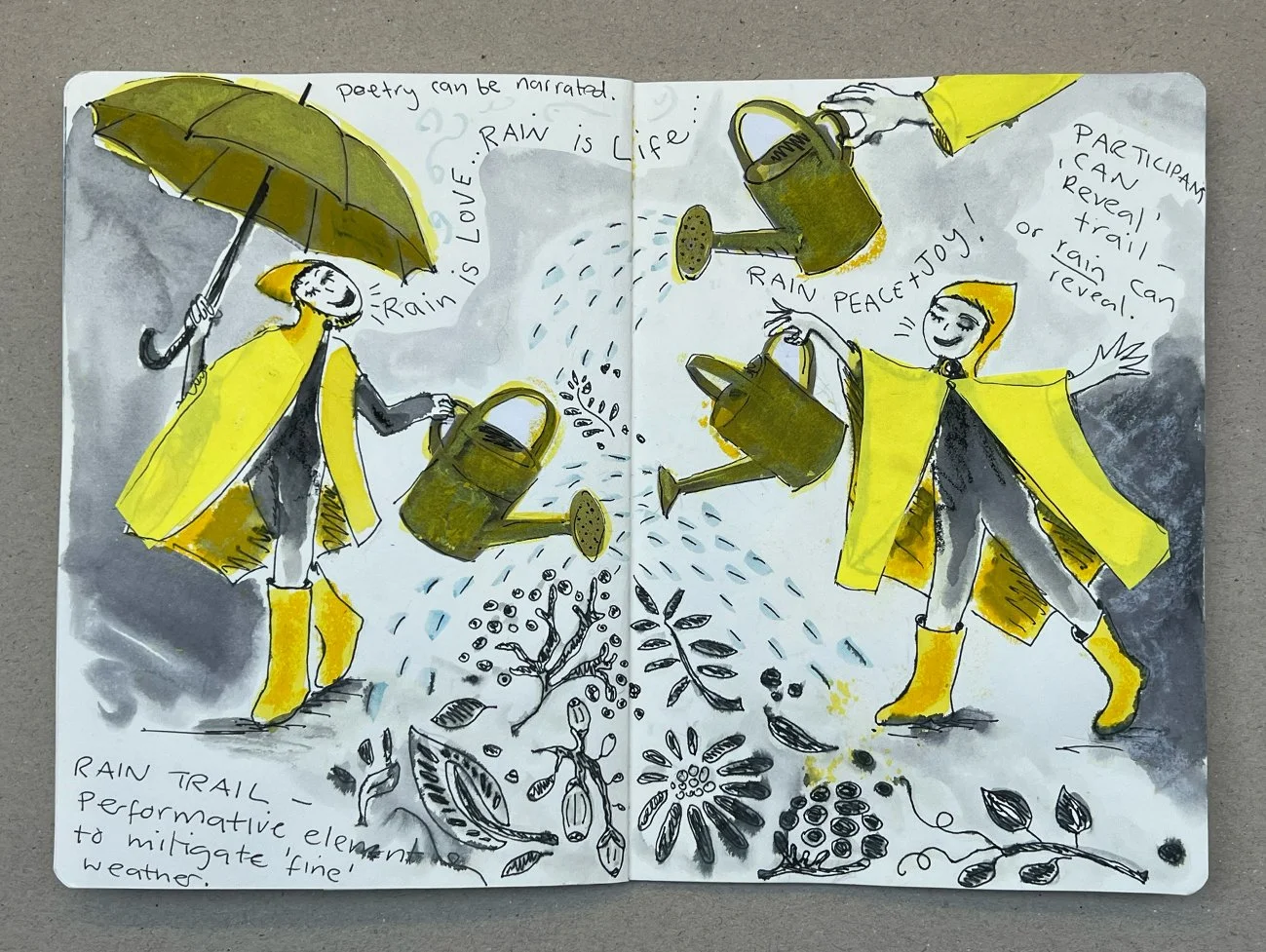
As no rainfall occurred during the festival, six rain-simulation performances invited audiences to “be the rain” by watering the path and revealing the hidden artworks and ecopoetry. Performers wore bright yellow waterproof ponchos and wellington boots—a colour long associated with classic rainwear. The choice of yellow not only made them highly visible within festival crowds but also reinforced the joyful, rain-focused spirit of the performances.
These participatory events, where the audience became both performer and rain, created a sense of wonder—children delighted in revealing the artworks, while adults enjoyed both the poetry and the “magic” of the reveal. Please look at the video below to see the experience.
Festival organisers noted how Rain Trail aligned with their mission to support pioneering new work and bring the unexpected to audiences:
“We were particularly excited to host Rain Trail as a new performance piece that had not been seen anywhere else before. Supporting and commissioning new pieces and emerging artists ties in well with our objectives as an Arts Council-funded NPO organisation. It’s also great for our reputation as a pioneering and exciting festival to showcase new performances and to bring the unexpected to our audiences. Rain Trail definitely did this - everyone I spoke with had never experienced anything like it, and were excited to see Rain Trail appear. The project appealed to a range of people, I saw young children enjoying revealing the trail and adults questioning and reflecting on the poetry and visual elements of the piece.”
— Nuala Clarke, Cultural Engagement Officer, BCP Council
Entanglements with Rain
Illustration, eco-poetry, and ecological relationships
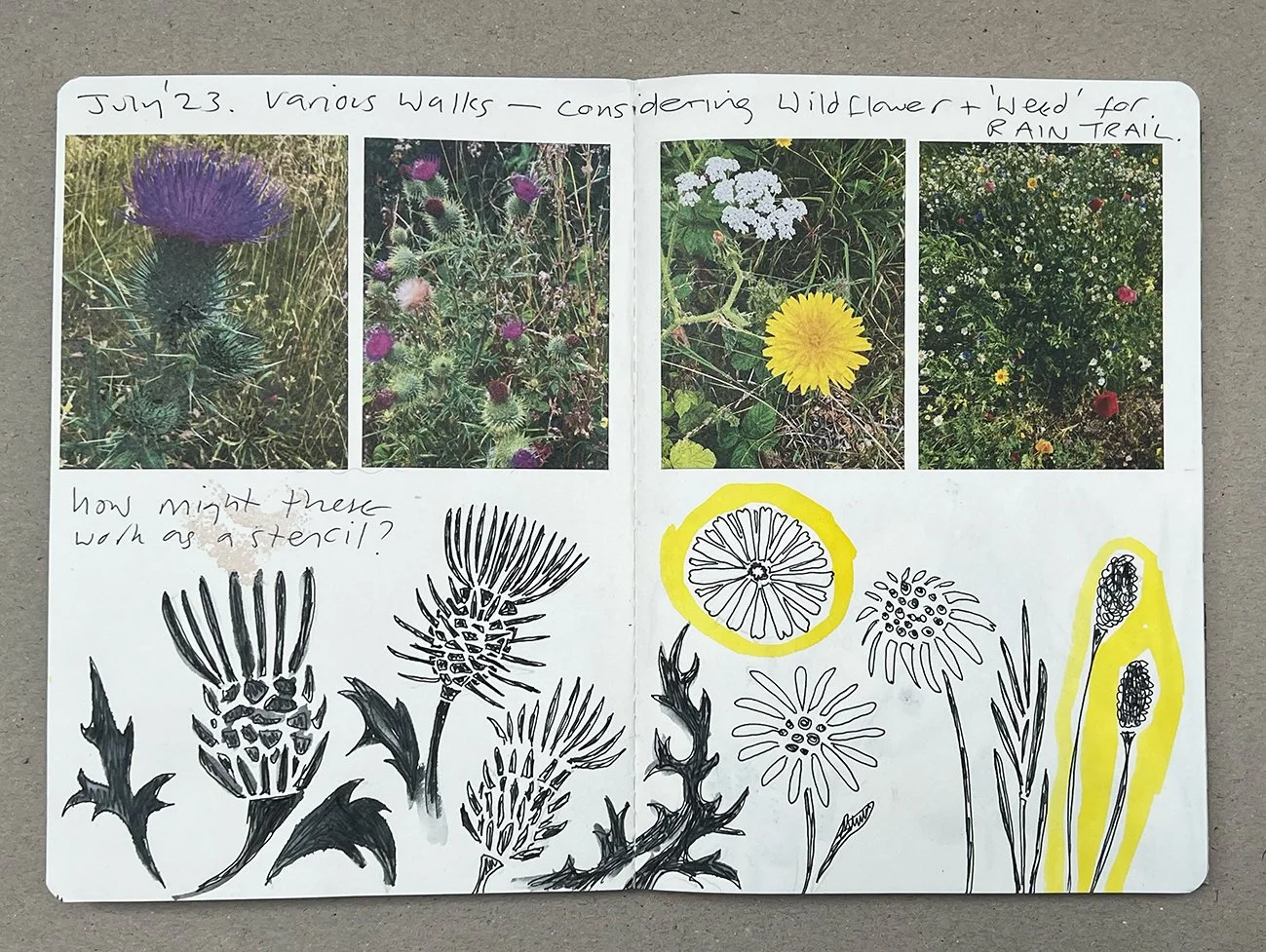
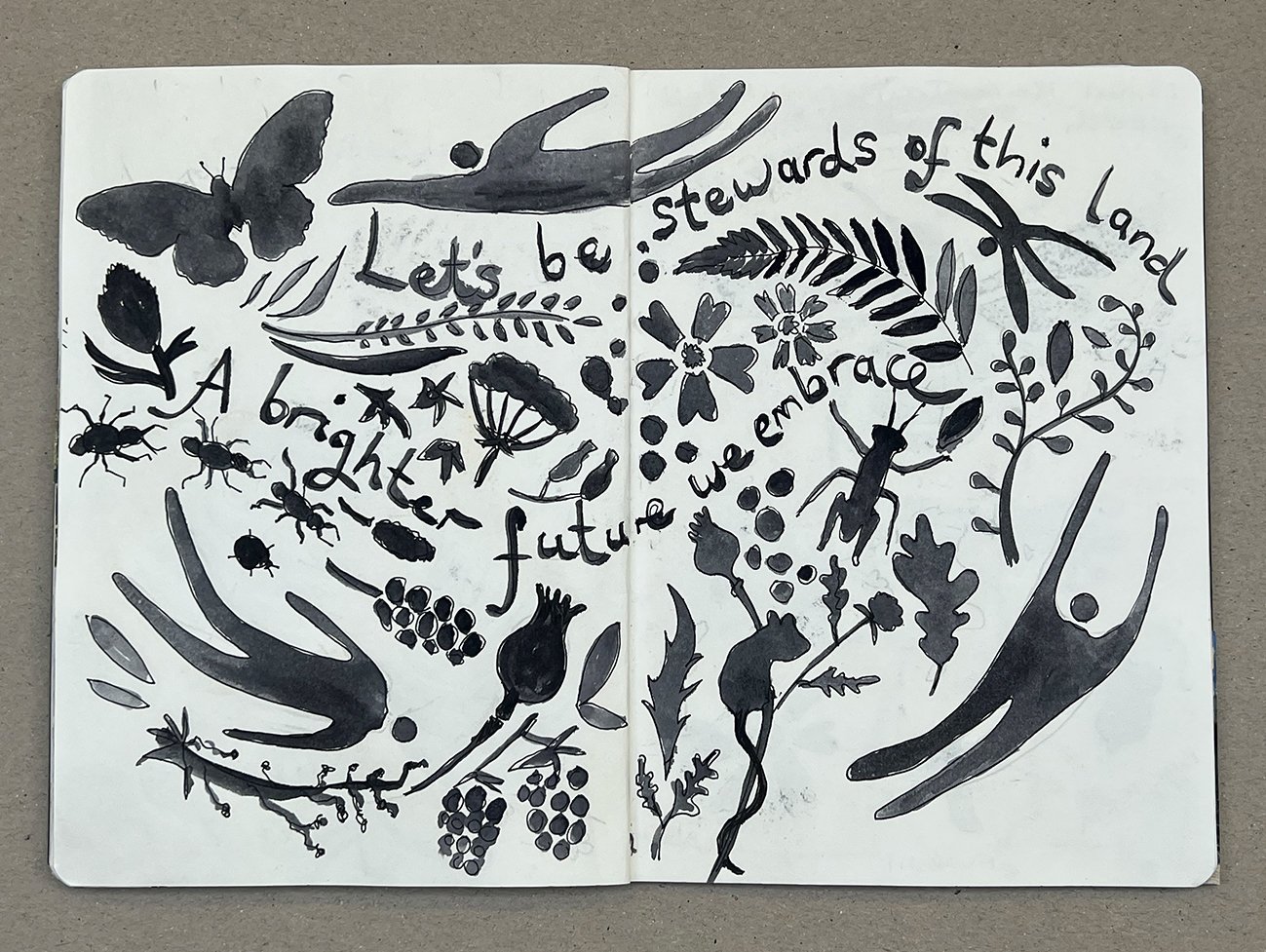
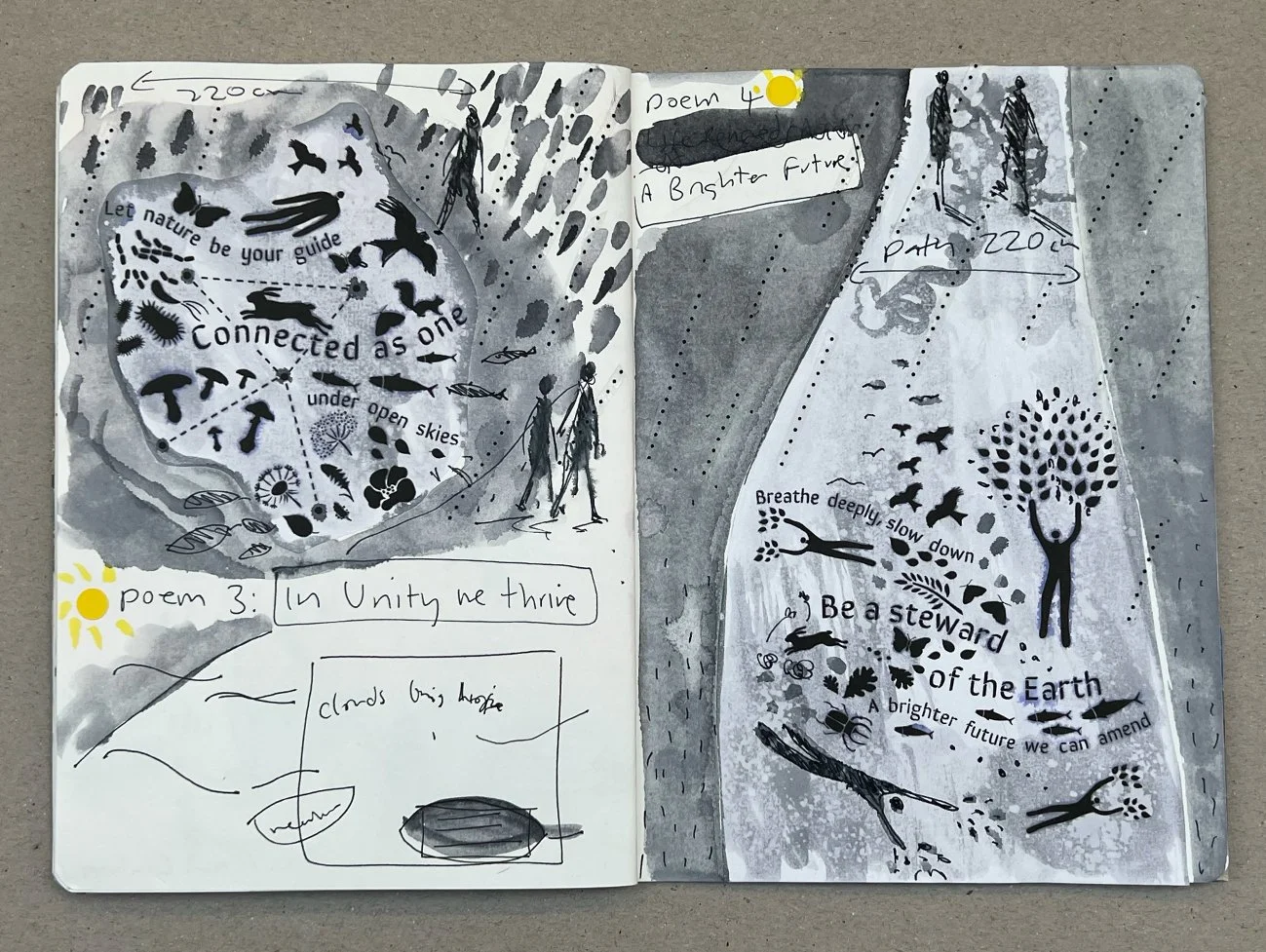
Building on walks through Dorset landscapes, I created four large, rain-responsive illustrations paired with eco-poetic text. The artworks depict common plants—so-called “weeds” such as thistle, nettle, cow parsley, and dandelion. By portraying these species in artwork, Rain Trail aims to elevate their status and highlight their ecological importance for pollinators, soil health, and biodiversity. The illustrations also feature local insects and the endangered hen harrier. Designed to be easily recognisable rather than abstract, the imagery creates an immediate connection for participants. Revealed only when wet, the artworks emphasise the interconnectedness of all living things and invite reflection on ecological relationships within a living landscape. Early stages of artwork development can be seen below.
During rain-simulation performances, participants engaged with eco-poetic prompts stencilled on the ground—“Slow down”, “Embrace the ever-changing Weatherworld”, “Let nature be your guide”, and “Become a steward of the Earth”—encouraging reflection on their embodied relationship with weather and the more-than-human world. Live poetry readings by Ben Whittall, a recent Creative Writing graduate from Arts University Bournemouth (AUB), extended these themes. He wrote four poems inspired by the artworks and key texts, performing them at each location to enrich the participatory and sensory experience.
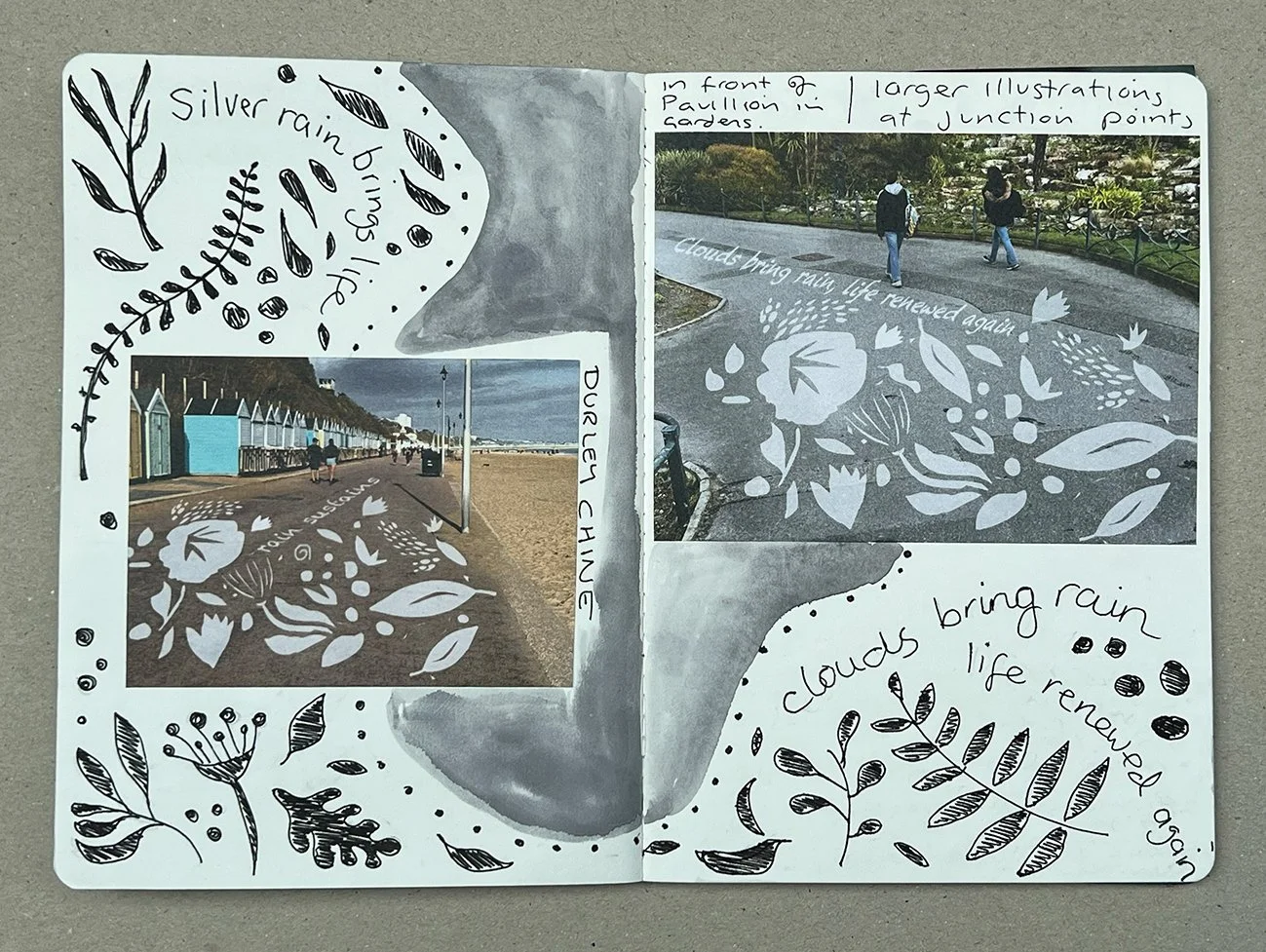
Methods and Materials
Illustration and stencils
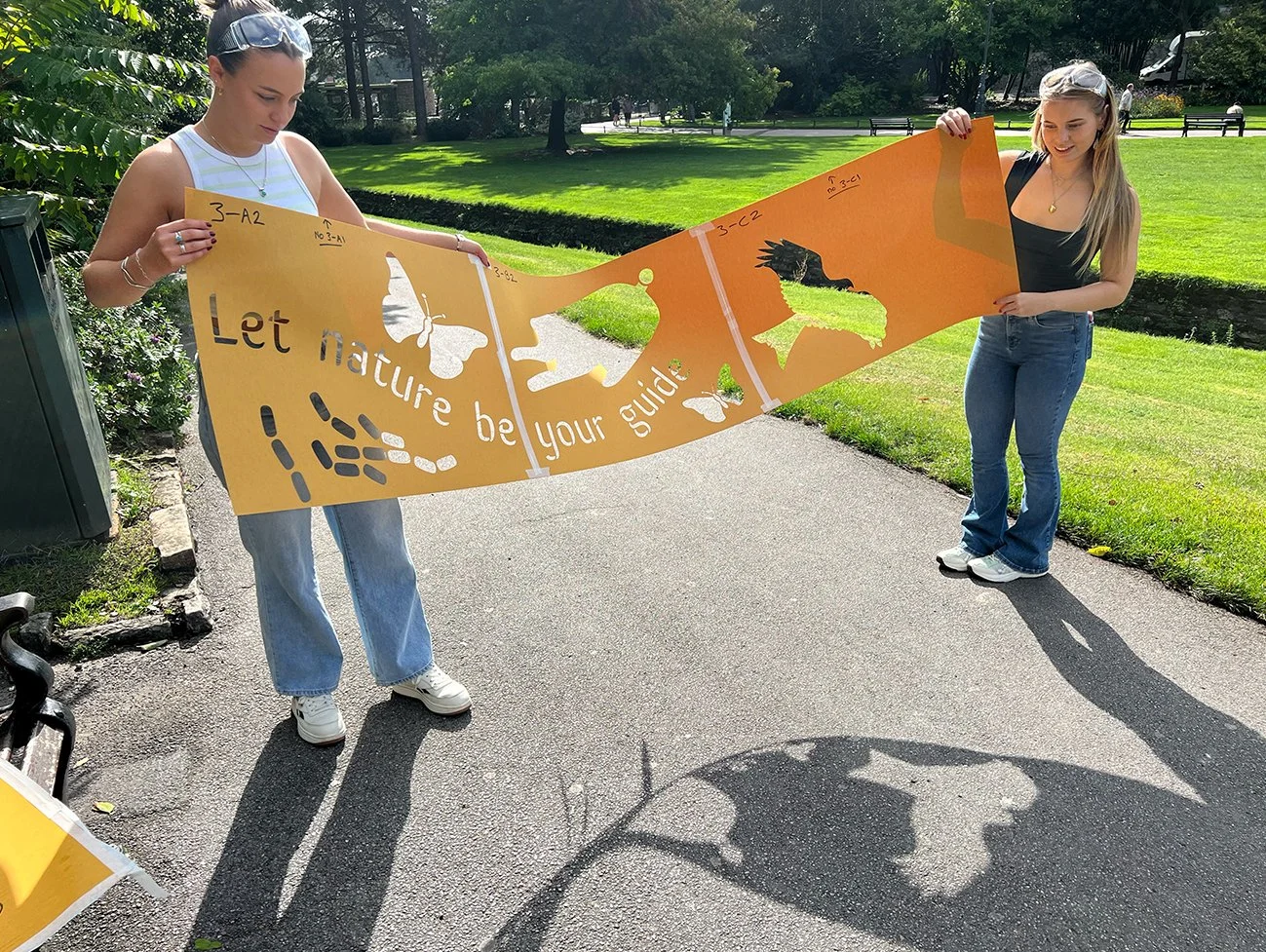
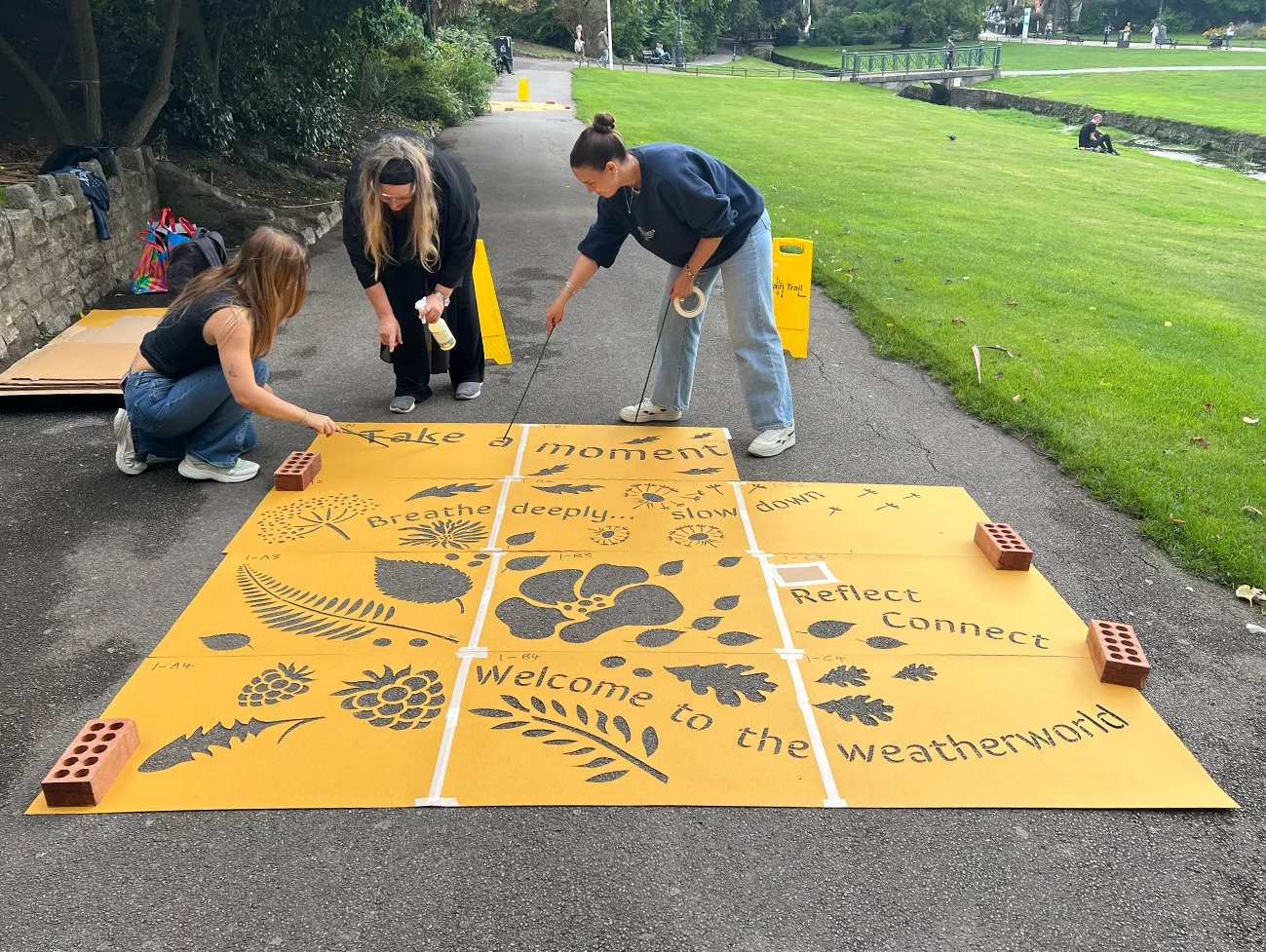
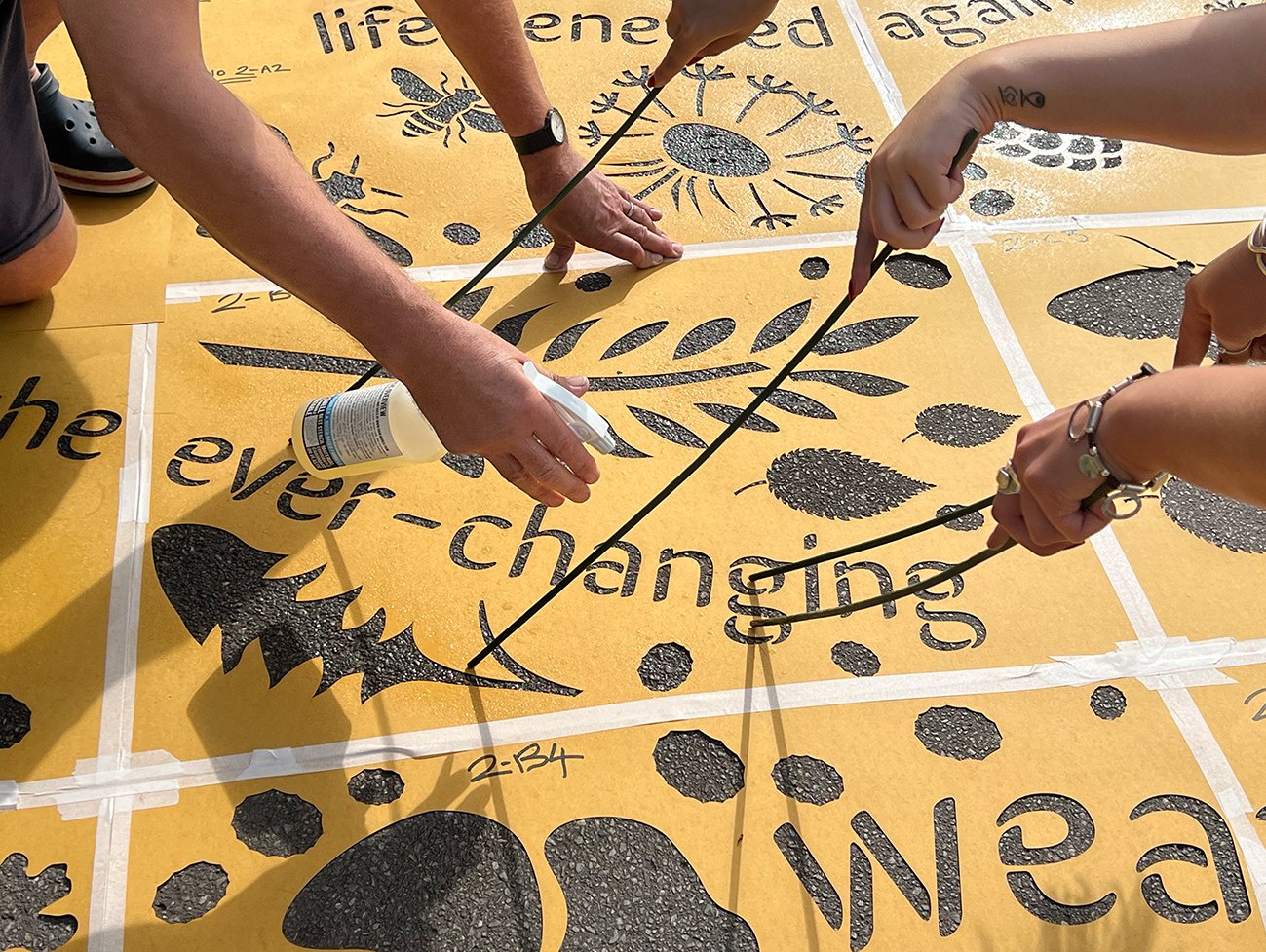
The hand-drawn illustrations were refined in Adobe Illustrator and converted into laser-cut stencils to make the application process in Bournemouth Lower Gardens as quick and efficient as possible. Each stencil was applied using invisible, eco-friendly hydrophobic paint, which remains hidden when dry and reveals the artwork only when wet. The images below capture the scale of the stencils in situ, and document the application process carried out with support from AUB students, Phoebe and Abigail.
Activated by rain
While Rain Trail is grounded in traditional illustration and ecopoetry, its interactive, magical quality is catalysed by the eco-friendly hydrophobic paint, which brings the images and words into dialogue with water and audience participation. This water-based, non-toxic material is safe for plants and wildlife, and its temporary nature meant the illustrations gradually disappeared within a week of the festival.
Rethinking Rain
Participant reflections and research insights
Analysis of 32 participant interviews and reflections from Rain Trail indicated that the experience encouraged people to reconsider their relationship with rain. Rather than seeing it as something to avoid, some participants spoke of embracing it: “It did make me think that I avoid walking in the rain, and maybe I should do more of it” and “It is really nice to make the most of the whole of the weather system – rather than complaining about it.” Others reflected on the emotional dimensions of rain, recognising how perspectives on weather are often shaped by habit and cultural narratives: “It made me think about how sometimes we can get really negative about the weather, and to think about it a bit more positively”and “I really love the idea of making something fun out of something people don’t really love – like the rain.” One participant simply reflected: “It was joyful and a lovely way to get people thinking.”
These responses suggest that Rain Trail created opportunities for embodied engagement, transforming rain from a routine inconvenience into a medium for reflection, curiosity, and play. This aligns with Ingold’s (2010) concept of the weather-world, in which weather is not a passive backdrop but an active, immersive medium shaping lived experience. Through its interactive design and participatory elements, the project demonstrates how creative interventions can increase awareness of ecological interconnections and encourage reflection on more-than-human relationships.